

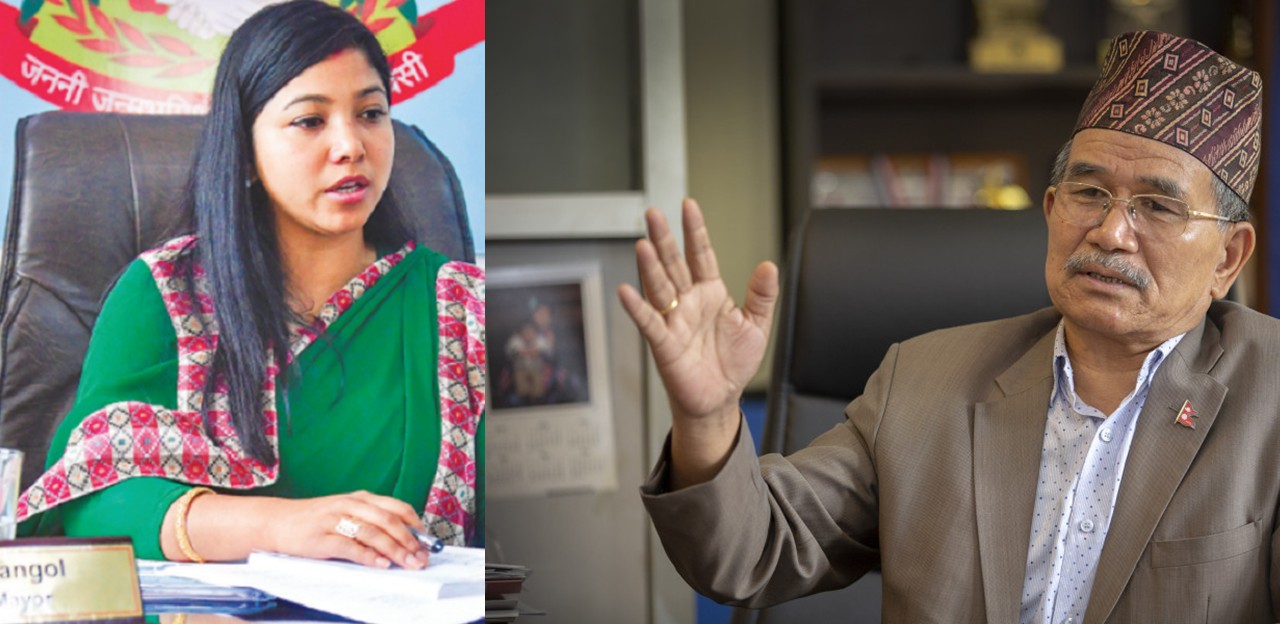
Kathmandu, May 17, 2025 — The ongoing Sagarmatha Sambaad 2025 witnessed powerful advocacy from local government representatives today, calling for greater authority, resources, and direct access to international climate finance mechanisms. The discussions, held under the theme “Sustainable Cities and Communities” and “Addressing Loss and Damage in Mountains”, highlighted the critical role of local governments in tackling the impacts of climate change.
In a special panel session, Lalitpur Metropolitan Mayor Chiribabu Maharjan and Kathmandu Metropolitan Deputy Mayor Sunita Dangol passionately raised their voices on behalf of local governments, emphasizing the need for constitutional recognition of their rights and greater autonomy in managing urban sustainability challenges. “Local governments are on the frontlines of climate impacts and urban crises, yet we often lack the authority and resources to respond effectively,” they stated, urging the federal and international bodies to empower municipalities for sustainable development.
Similarly, during the session on Loss and Damage in Mountain Regions, representatives from mountain communities stressed that local governments must have direct access to climate loss and damage funds. They highlighted the challenges faced by mountain communities already bearing the brunt of melting glaciers, flash floods, and erratic weather patterns.
A pressing question was raised regarding the bureaucratic delays in proving that damages are caused by climate change, which often delays critical support. Responding to this, the Executive Director of the Fund for Loss and Damage emphasized the importance of creating a flexible, accessible, and affordable financial system. He called for rapid response mechanisms, stronger coordination between stakeholders, and the urgent need to mobilize more funds globally to meet the increasing demands of vulnerable countries. “Determining the actual needs and ensuring timely financial support is crucial. We must simplify procedures to provide faster relief to those affected,” he added.
Despite the importance of local governments in addressing climate crises, participants noted with concern that their participation in the Sambaad remained limited. Many argued that without including the voices of those working directly with affected communities, climate discussions would remain incomplete and disconnected from ground realities.
As the Sambaad continues, the call for stronger representation, direct financing mechanisms, and immediate action to protect vulnerable mountain and urban communities grows louder. The hope remains that these discussions will translate into concrete policies and financial flows that truly empower local actors to combat the growing climate crisis.
👍